 Confidential
Custom CRM for Car Dealerships
Custom CRM system for car dealerships with vehicle management, document automation, and integrations with external services.
Read more →
The Keyword Parser is a web-based platform designed to automate keyword research and simplify the management of large keyword datasets. Through integration with Google Ads, the system helps marketers, SEO specialists, and digital agencies collect, organize, process, and export search data from a single interface.
Instead of performing repetitive keyword research manually or managing results across multiple spreadsheets, users can create parsing tasks, monitor their progress, review collected data, and prepare keyword lists for further use in SEO and advertising campaigns.
The primary objective of the project was to create a centralized keyword research and management platform capable of processing large volumes of search queries while reducing manual work and improving the consistency of collected data.
The application combines Google Ads data collection, scheduled background processing, user management, reporting, and import and export tools. This allows teams to manage the complete keyword research workflow within one system.
The platform integrates with Google Ads to collect keyword ideas and related search data. Users can create parsing tasks based on selected parameters and receive structured keyword results for further analysis.
Automating this process reduces repetitive manual research and makes it easier to build keyword lists for websites, advertising campaigns, content strategies, and semantic structures.
The administration panel provides access to previously created parsing tasks, their current statuses, results, and processing history.
Users can monitor active operations, review completed tasks, identify failed requests, and manage collected keyword data without switching between external services or separate files.
The system includes tools for creating, editing, and removing users. Access permissions can be configured according to each user’s responsibilities, making the platform suitable for collaborative work within marketing teams and digital agencies.
This approach helps separate administrative functionality from everyday keyword research operations while protecting system settings and project data from unauthorized changes.
Keyword collection and related processing operations can be executed automatically through scheduled cron jobs.
Background automation allows long-running tasks to be processed without requiring users to keep the application open. It also provides a foundation for recurring data collection and other scheduled workflows.
Collected keyword data can be exported to Excel or CSV files for further filtering, analysis, reporting, or integration with existing SEO and advertising workflows.
Providing multiple export formats makes it easier to transfer results into spreadsheet applications, internal reporting systems, and third-party marketing tools.
The platform supports importing keyword lists from Excel files, allowing users to upload large datasets for batch processing.
This functionality is useful when existing keyword collections need to be expanded, reprocessed, or combined with new data obtained through Google Ads.
The system can send email reports containing parsing results, task information, or error notifications.
This allows users to receive important updates without continuously monitoring the administration panel and makes it easier to respond when an automated task cannot be completed successfully.
The platform organizes keyword research into a clear and repeatable workflow:
Users create a new parsing task and define the required input data.
The system sends requests to Google Ads and processes the returned keyword information.
Task progress and processing status are displayed in the administration panel.
Collected results are stored for review and further management.
Users can export the final keyword list to Excel or CSV.
Email notifications provide information about completed tasks or processing errors.
This structured workflow reduces the number of disconnected steps and provides users with better visibility into the entire keyword collection process.
The Keyword Parser was developed using a reliable and maintainable web technology stack:
Laravel – for backend architecture, business logic, database operations, Google Ads integration, scheduled tasks, and report generation.
Laravel Sanctum – for secure authentication and protected access to application functionality.
Blade – for server-rendered templates and the application interface.
TypeScript – for structured client-side logic, improved type safety, and easier code maintenance.
SCSS – for modular and maintainable interface styling.
Google Ads integration – for collecting keyword ideas and related search data.
Cron jobs – for scheduled execution of automated background processes.
Excel and CSV processing – for importing existing keyword lists and exporting collected results.
The separation between backend business logic, scheduled processing, and frontend interaction makes the system easier to maintain and extend with additional keyword sources or analytical features.
The platform can support several practical SEO and digital marketing workflows:
SEO specialists can collect and structure keyword groups for website pages and content strategies.
Marketing teams can discover new keyword ideas for Google Ads campaigns.
Digital agencies can manage keyword research tasks and datasets for multiple projects.
Content teams can identify relevant search topics and prepare keyword-based content plans.
Businesses can automate repetitive keyword collection and reduce the risk of errors caused by manual processing.
The Keyword Parser centralizes keyword collection, task management, reporting, and data exchange within one web application. It reduces dependence on repetitive manual operations and provides a more structured approach to working with large keyword datasets.
The project demonstrates practical experience with Laravel development, Google Ads integration, scheduled background processing, role-based user management, email reporting, and Excel and CSV data workflows.
The resulting platform provides a scalable technical foundation that can be extended with additional data providers, filtering tools, keyword grouping, search volume analysis, and more advanced SEO reporting functionality.
The completed Keyword Parser provides a centralized and repeatable workflow for collecting, processing, managing, and exporting large keyword datasets. By combining Google Ads integration, automated background tasks, user management, reporting, and data exchange tools, the platform reduces the number of manual operations involved in keyword research.
The project delivered several practical benefits:
Faster keyword collection through automated requests to Google Ads.
More structured data management through centralized task history, processing statuses, and stored results.
Reduced manual work through scheduled background processing, bulk Excel imports, and automated email notifications.
Flexible data exchange with Excel and CSV export options for existing SEO and advertising workflows.
Controlled team access through user management and configurable permissions.
A scalable technical foundation that can support additional data providers, analytical tools, and more advanced keyword processing features.
The final result is more than a standalone parsing tool. It is a structured keyword research automation platform that connects data collection, task management, reporting, and export operations within a single web application.
The Keyword Parser demonstrates how a custom Laravel application can transform a repetitive and data-intensive workflow into a more efficient, transparent, and manageable process.
The project also showcases practical experience with Google Ads integration, background task automation, authentication and access control, email reporting, and Excel and CSV data processing. Its modular architecture provides a reliable basis for future expansion, including keyword grouping, advanced filtering, search volume analysis, and integration with additional marketing services.
Discover more projects that showcase different technologies and business challenges.
Confidential
Custom CRM system for car dealerships with vehicle management, document automation, and integrations with external services.
Read more →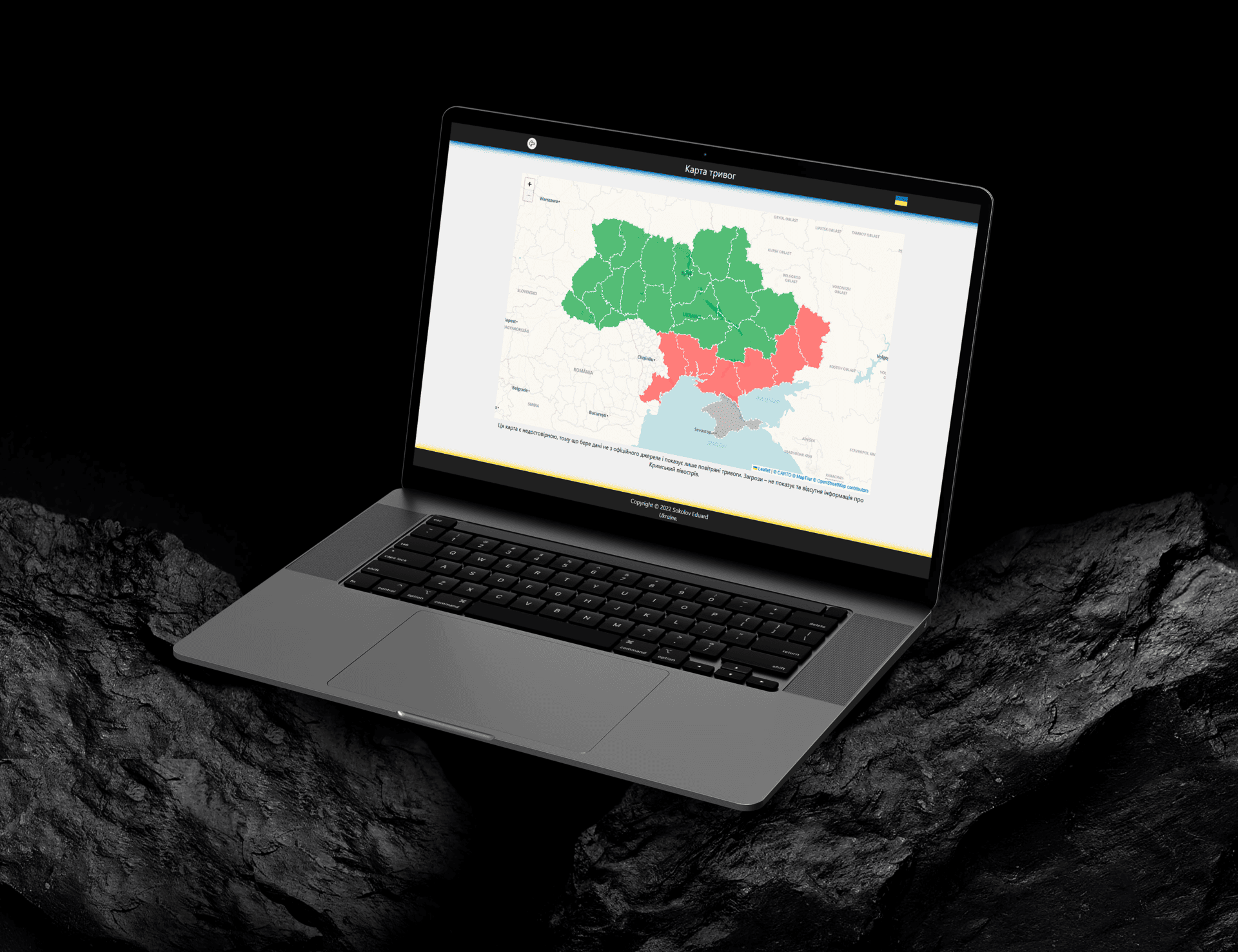
An interactive React-based mini-website featuring an air raid alert map, military loss statistics, and a small casual game. The project uses Redux for state management, Axios for API requests, and SCSS for responsive interface styling.
Read more →
A trading and crypto platform for portfolio tracking, performance analytics, trader rankings, referral management, job listings, market content, and automated Telegram reports.
Read more →Have a similar idea in mind? Let’s turn it into reality.